


+91 9949756557
THE PILOT PROJECT CARRIED OUT AT SHAIKPET CHERUVU ( HYDERABAD )
In support of the Swachh Bharat concept we have introduced our expertise in the cleaning of lakes and other polluted water bodies to the Government of Telangana. In connection with this The Greater Hyderabad Municipal Corporation and Irrigation CAD Department (Government of Telangana) had asked us to carry out a project to understand the feasibility of ALGASTATVA through GREEN ECO RECREATION TECHNOLOGY (GERT) to recreate the lost eco system of Shaikpet Cheruvu back into natural conditions.
Lake Name : Yerra Kunta / Shaikpet Cheruvu (Lake ID 3902)
Project Duration : (1st Nov’2021 to 31st Jan’2022)
Coordinates : 17°24′22″N 78°23′59″E (Hyderabad)
Water Spread Area : 3.56 Acres
NODAL office for the Project :- Superintending Engineer, HL & WBM Circle, Hyderabad
INITIAL CONDITION OF THE LAKE

The ecosystem been critically affected, modified and destructured because of water pollution.
Graphical representation of Shaikpet Cheruvu water test report 1st Nov’2021

REPORT AFTER 90 DAYS
Picture taken on 21st Oct 2021 (Before Treatment)


Picture taken on 24th Jan 2022 (After Treatment}


HIGHLIGHT OF ACHIEVEMENTS
100% removal of Toxic Gases & Stinking smell from polluted lake water
Mosquitoes got reduced by more than 80 %
Oxygen getting richer and animals / birds started drinking water
Reduction of Chemical Oxygen Demand (COD) by 84.29%
Reduction of BioChemical Oxygen Demand (BOD) by 84.16%
Reduction of Ammoniacal Nitrogen by 85.47%


A big achievement project at M/s. VITTHAL CORPORATION LIMITED Taluka: Madha, Solapur, Maharashtra


Vitthal Corporation Ltd. (ISO 9001: 2008 certified) is recognized as a trusted Manufacturer & Supplier of assorted products
such as White Sugar, Extra Neutral Alcohol, and Rectified Spirit.
A Trial Has Taken For Evaporating 1,00,000 Litres Of Spent Wash Per Day.
Distillery spent wash is the unwanted residual liquid waste generated during spirit production and pollution caused by it is one of the most critical environmental issues. BEEP (BIO EFFLUENT EVAPORATION PLANT) is the perfect remedy for these critical environmental issues and is specially designed to solve the problems raised by industrial pollution. Here we tried BEEP at the above distillery plant with a daily sample of 100000 Litres of spent wash per day and the same is converted into oxygen to get it evaporated through the Algastatva bioremediation process. These microalgae refer to unicellular green micro-organisms, capable of growing in extremely harsh and difficult environments by taking in carbon dioxide from the environment and giving out oxygen through photosynthesis.

BEEP Process - Day

BEEP Process - Night
The COD & BOD was brought down by 78% & 79% respectively which in turn helps to regenerate more oxygen and make the evaporation process much easier and help in achieving 100% daily evaporation. BEEP can evaporate any number of SPENT WASH within 24 Hrs without 0% sludge formation. No chemicals are used. 100% friendly in nature. Very cost-effective.

TARGET Daily 1,00,000 Litres of SPENT WASH to be evaporated in 24 Hrs
ACHIEVEMENT 47,57,000 Litres of SPENT WASH been evaporated in 617:20 Hrs with 0% sludge formation
Sewage Treatment Plants
STP water refers to the treated water that comes from Sewage Treatment Plants (STPs). These plants are specifically designed to process wastewater originating from various sources, including households, industries, and commercial establishments. STPs clean sewage water by taking out harmful stuff. Once cleaned, this water, called effluent, is safe enough to put back into rivers or even be reused for other things. This helps stop water pollution. To make sure it's safe to release, the treated water from the STP must meet certain standards.


Benefits using ALGASTATVA technology in any existing Sewage Treatment Plants (STPs)
Using ALGASTATVA for sewage treatment offers numerous benefits that make it a promising and sustainable alternative to conventional methods.
Environmental Benefits:
Natural Nutrient Removal: ALGASTATVA are great at cleaning up dirty water! They slurp up extra nitrogen and phosphorus, which are nutrients that cause harmful algal blooms and kill fish in rivers and lakes if left unchecked. Algae use these nutrients to grow, naturally making the water cleaner.
Carbon Sequestration: During photosynthesis, algae consume carbon dioxide (CO2), thus reducing greenhouse gas emissions associated with wastewater treatment. This makes algae-based systems more carbon-neutral or even carbon-negative.
Oxygen Production: As a byproduct of photosynthesis, Algastatva release oxygen into the water. This oxygen benefits aerobic bacteria that break down organic matter in the sewage, enhancing the overall treatment efficiency and reducing the need for energy-intensive mechanical aeration.
Heavy Metal and Micropollutant Removal: Certain types of algae can clean up water by soaking up harmful substances like heavy metals (cadmium, lead, and arsenic). They can also remove tiny pollutants called micropollutants, which include things like medicines and products we use every day. Traditional water cleaning methods often miss these.
Reduced Sludge Production: Regular water cleaning methods often create a lot of toxic chemical waste that's hard to get rid of. But algastatva based systems are different; they produce algal biomass instead, which can actually be useful.
Economic and Operational Benefits:
Cost-Effective and Energy-Efficient: Traditional ways of cleaning dirty water use a lot of electricity for things like bubbling air through it and adding chemicals. This makes them expensive to run. Algastatva-based systems, however, use sunlight to do their work. This means they need much less energy, costing less to operate and making them a cheaper, more sustainable option.
Resource Recovery and Value-Added Products: The algal biomass produced during treatment is a valuable byproduct. It can be harvested and used for various applications, including :- Biofuels (e.g., biodiesel, biogas), Biofertilizers and Animal feed.
Scalability and Adaptability : Algastatva-based wastewater treatment systems are incredibly flexible. You can use them in small countryside areas or in big city and industrial settings, making them suitable for many different situations.
Reduced Chemical Use : Algastatva-based systems are great because they naturally get rid of pollutants and nutrients. This means we can use far fewer, or even no, chemical additives, which saves money and is much better for the environment.
Basically, using algastatva to treat sewage is a smart and eco-friendly idea. It doesn't just clean dirty water; it can also help us get valuable resources back and is much better for the environment.


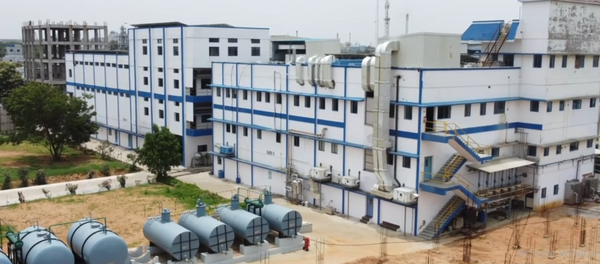
An analytical study performed at Erythro Pharma Private Limited focusing on the application of Algastatva for the treatment and management of pharmaceutical industrial discharge
We have carried out our BEEP process on their effluent coming out of 2 products separately to understand the compatibility of ALGASTATVA with these products
Diacid II & Diacid III


The BEEP technology was carried out successfully with 92% of dilution and 95% of evaporation.
A present ongoing project at
ENPIAR PHARMA PRIVATE LIMITED - HYDERABAD, Telangana


This Pharma has rich experience in servicing large scale custom manufacturing needs of global customers in pharmaceuticals, agrochemicals, specialty and fine chemicals. We have carried out our BEEP process on their effluent coming out of 2 products separately to understand the compatibility of ALGASTATVA with these products
1st Product Sampling - ANTHRANIL


Algastatva Cultivation Tank
2nd Product Sampling - BB Acid


Processing Tank
Once raw effluent is added directly to micro algae in the processing tank, the parameters of raw effluent automatically get diluted to the tune of 90% to 60% . The diluted effluent is passed to TFM to separate the presence of algae and further it is forwarded to RO for end result.

TFM and RO processing unit


RO Unit

Thin Film Membrane (TFM
No toxic smell
100% Success Rate
100% Pollution Free
100% Organic Process
100% Environment Friendly
Only 5 – 10 Kg Sludge Formation IN 100 KLD